Learn How AI Works and How to Work With It

What is Generative AI?

Artificial Intelligence refers to the ability of computers to perform tasks related to human intelligence, such as learning, reasoning, and problem-solving.
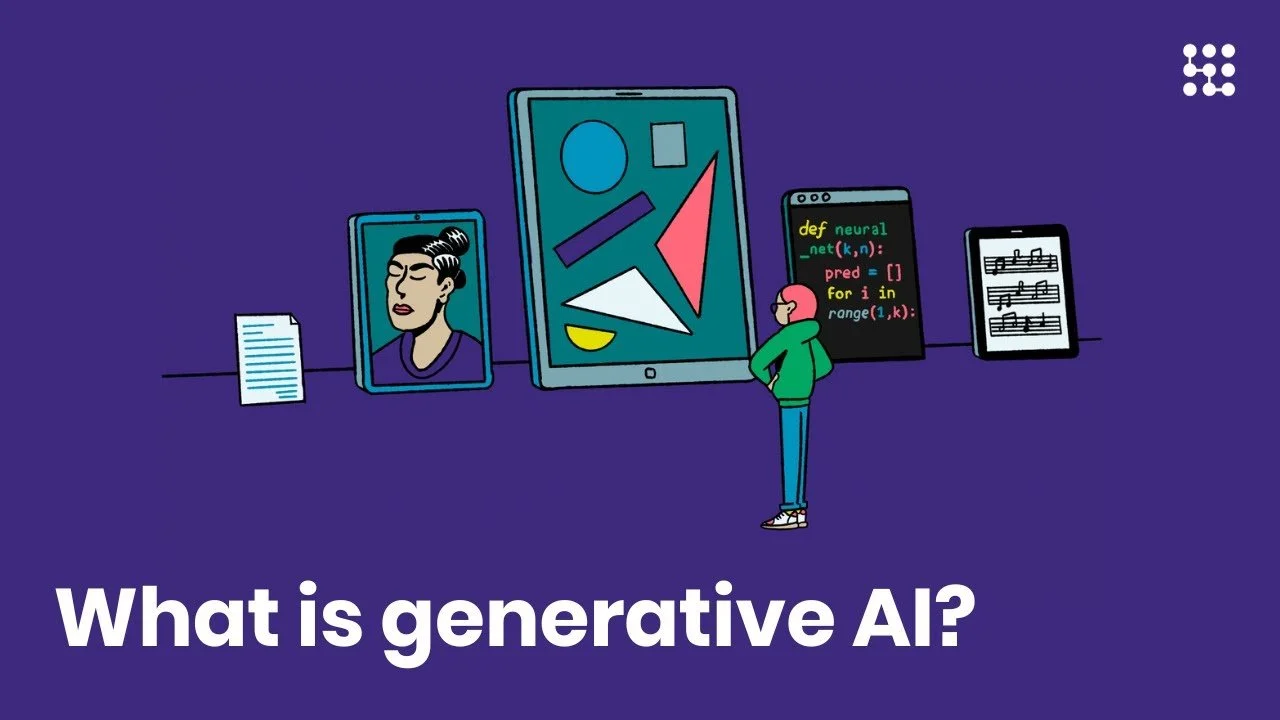
This toolkit focuses on generative AI (GenAI)—a type of artificial intelligence that generates content such as text, images, music, and code.
GenAI uses Large Language Models (LLMs), which are trained on massive amounts of information. They predict what word (or part of a word) comes next in a sequence of words.
They learn from millions of examples—and generate new words, images, and other content based on the patterns they have learned.
AI Glossary for Communications Professionals
This glossary provides definitions of selected terms, with a focus on concepts relevant to communications professionals.
Agent: An AI program that can complete tasks with minimal human input, like scheduling meetings, updating a database, responding to questions from customers, and more.
Artificial Intelligence (AI): Technology that simulates the ways humans think, enabling machines to perceive, reason, and act on data to perform a wide variety of tasks—either following fixed rules or learning on their own.
Bias: A skew in AI outputs when training data lacks balance, variety, or diversity. AI trained on data that reflects stereotypes can reproduce those biases in its outputs—such as generating only images of men to illustrate professions such as "CEO" or "engineer" and only images of women for "housekeeper" or "nurse."
Custom GPT: A tailored version of ChatGPT you can direct with specific instructions and examples to perform unique tasks relevant to your work.
Generative AI: A type of AI that analyzes huge sets of information, identifies patterns in math and language, and generates content—such as text, pictures, music, or code.
Hallucination: When AI generates false or inaccurate information, which may seem plausible to the user.
Large Language Model (LLM): A type of generative AI system (such as ChatGPT, Claude or Gemini) trained on massive amounts of text that can interpret and generate human-type language and other outputs.
Machine Learning (ML): A type of AI that enables computer systems to learn from data and improve outputs over time, without being specifically programmed by a human.
Prompt: The question, instruction, command, or other input a user gives to AI to generate a response.
Vibe Coding: Working with AI to create code based on natural language prompts—instead of writing code directly, users describe what they want the software to do, and AI generates the appropriate code.
Considerations and Concerns
Technologists, researchers, advocates, and users are engaged in robust conversations about the potential and pitfalls of generative AI. Below are a few issues to consider:
GenAI can produce errors that “feel” right
It can generate false information that might appear correct. You need to confirm the accuracy of information you choose to use.

It can reflect cultural biases
Data can be sourced from texts that reflect historical and societal biases. You need to keep an eye out for unfair, discriminatory, or misleading outputs.

It uses a lot of energy
LLMs require massive computing power, which consumes energy and produces carbon emissions. You can choose services that prioritize energy efficiency. You can also minimize unnecessary AI queries.

It can generate content from copyrighted material
LLMs do not "copy and paste" directly, but are trained on text that includes copyrighted material. They can generate outputs that closely resemble existing content, or reproduce language without attribution. You can revise generated text and use plagiarism detection tools.



Guidelines and Guardrails
Make time to experiment with it.
Adopting GenAI is a process of trying out new tools and new ways of working. When you do it consistently, you and the technology can learn how to work together.
Use it to supplement your intelligence, not replace it.
Work with GenAI to draft insights, ideas, and content you can work with. Consider it a “thought partner” to accelerate, reflect, and improve upon your own creative process and decision-making.
Working with it is an interactive process.
You use “prompts” to guide it to produce the most useful outputs. Think of it like a conversation colleague: Explain the purpose of your project, how you need the job to be done—and engage with it throughout the process.




Learn more